06 Archives
Museums and libraries
Institutional collections hold hardware, media and paperwork, and the paperwork is usually the part that makes the rest usable.
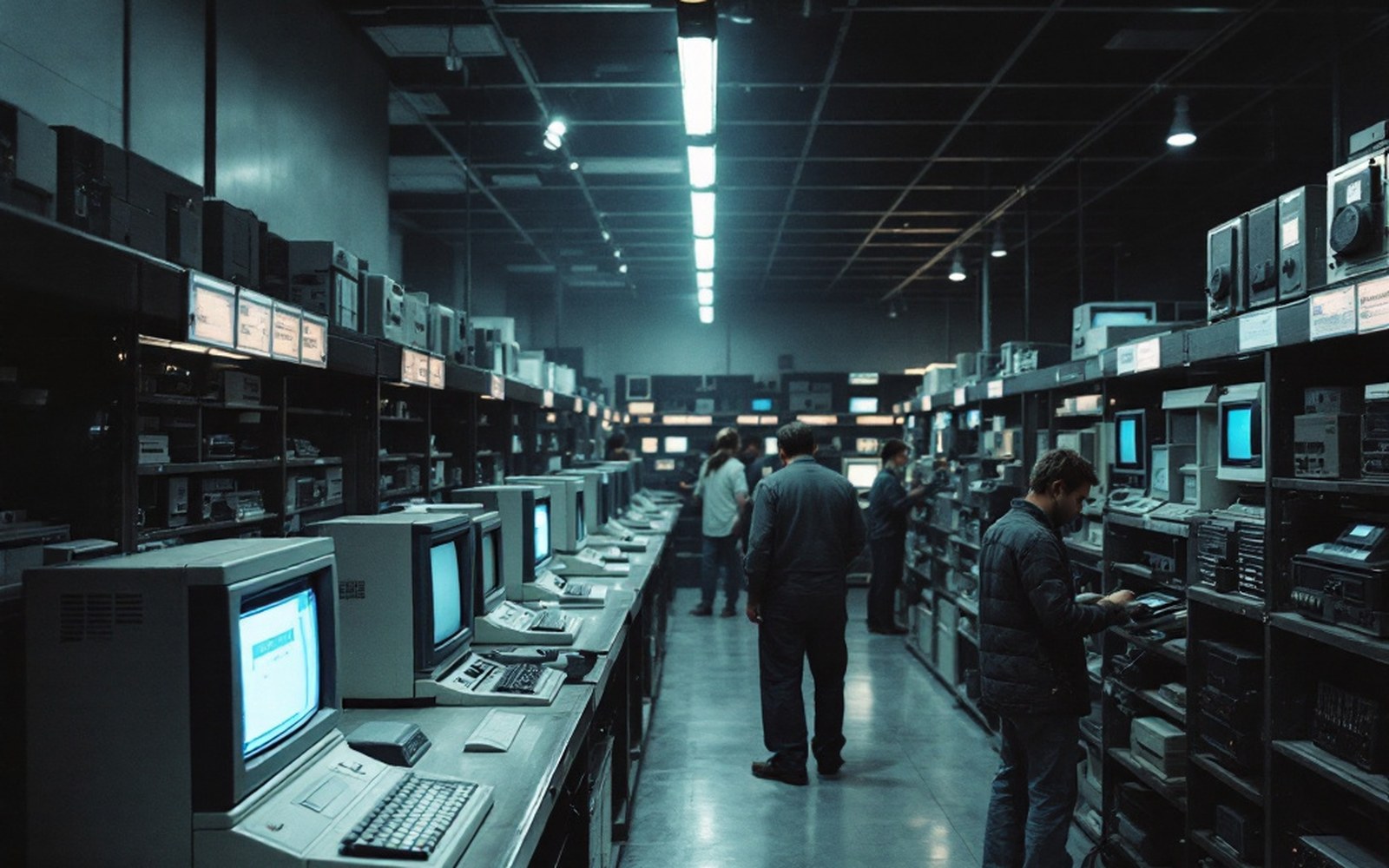
Accession labels are what turn a shelf of dead machines into a collection.
oujouer.com collection
The paper that makes the hardware make sense
A working machine without its documentation is a prop. A working machine with its manuals, its source listings and its internal correspondence is a primary source. That distinction is what separates a museum from a warehouse, and it is the reason preservation institutions have learned to treat paperwork — memoranda, design notes, licensing agreements, printouts — as carefully as they treat the physical media.
The Computer History Museum in Mountain View, California holds one of the most significant software collections in existence. Its catalogue runs to hardware, oral histories and software artefacts spanning several decades of computing. The institution took in the source code for early versions of MacOS, for Atari games from the cartridge era and for titles that had never been publicly accessible. When source code does survive, it is usually because someone carried a printout home, archived a backup tape, or kept an office filing cabinet that outlived a company's acquisition. The Computer History Museum has made a practice of accepting exactly those kinds of donations and making them legible.

The shelf is the easy half. Something has to still be able to read what is on it.
oujouer.com collection
The Internet Archive in San Francisco operates differently — its core practice is continuous collection at scale rather than curated donation — but its software library has grown into something that complements the museum model. The Archive runs emulated software directly in the browser through a framework called the Emularity, which means a catalogue entry can become a playable artefact. For browser games specifically, this matters: a Flash file sitting in cold storage is not playable, but the same file served through an emulated runtime becomes evidence of how it actually worked.
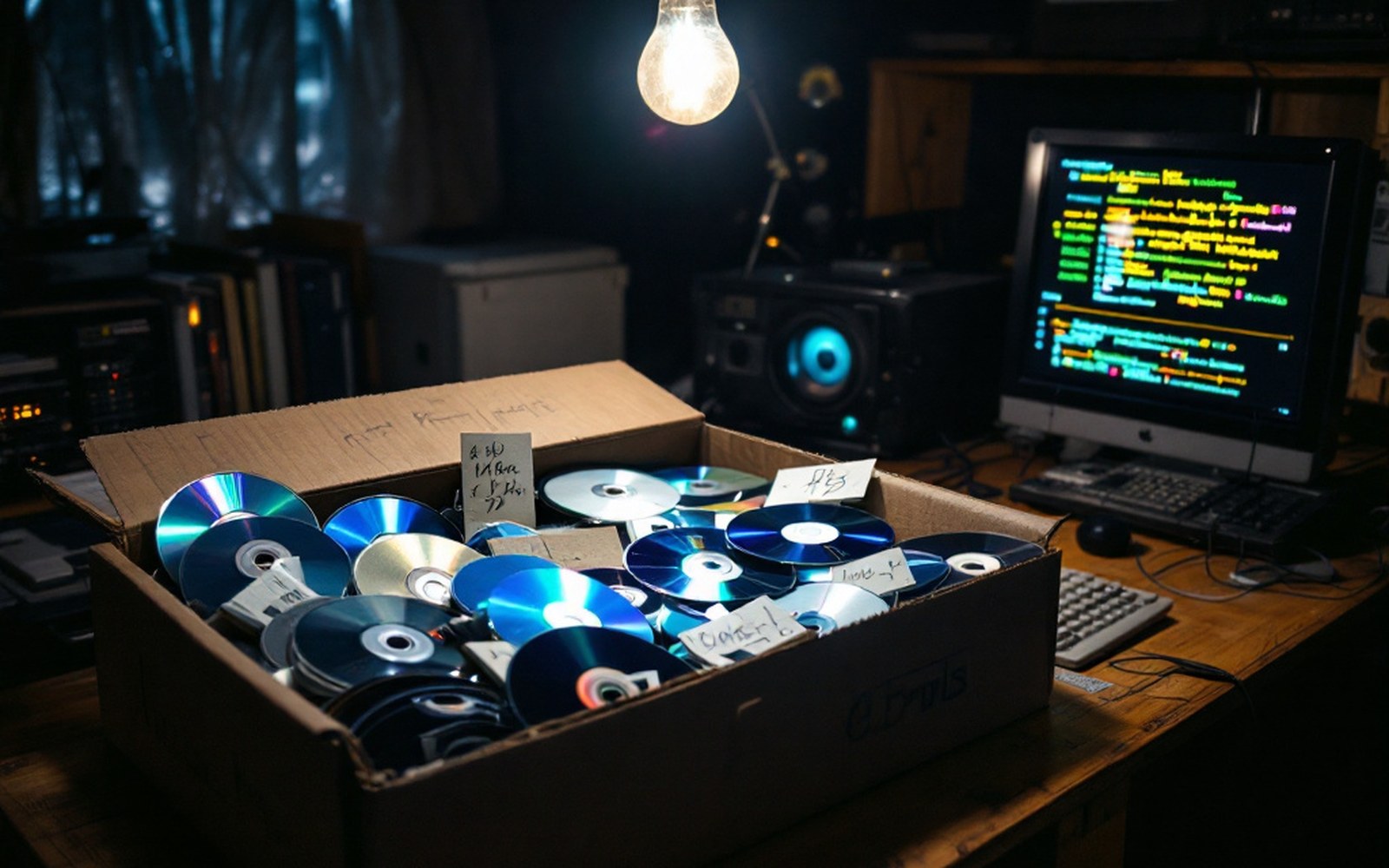
Handwritten labels, no index and no backup: how most source code actually survived.
oujouer.com collection
Why documentation is the hardest thing to keep
Neither institution can fully solve the paperwork problem, because paperwork was never treated as preservation material while it was being created. Studios closed and threw away filing cabinets. Publishers were acquired and their records were dispersed. Licences were signed, transferred and allowed to lapse without anyone creating a clear chain of custody. The result is that the history of browser gaming in particular is poorly documented at the institutional level. We know roughly when the major plugins appeared and when they were withdrawn; we know far less about the contractual and financial arrangements that governed which games appeared on which portals, or what the internal discussions at Adobe looked like as Flash's decline accelerated.
A working machine with its manuals, its source listings and its internal correspondence is a primary source.
The Video Game History Foundation, based in the United States, has worked to quantify the scale of this loss. Its research found that the overwhelming majority of commercially released games are out of print and inaccessible through any legal channel — a figure that rises sharply for the web-native titles of the plugin era, which were often distributed without physical media at all and exist now only in private archives, the Internet Archive's collection, or preservation projects such as BlueMaxima's Flashpoint. Libraries and museums can only preserve what they receive, and the donation pipeline for ephemeral browser content has always been thin.

One machine, many doors. Every terminal in the row was logged into the same world.
oujouer.com collection
The Software Preservation Network, a consortium of research libraries, has worked on the legal and technical frameworks that allow institutions to provide access to preserved software under exceptions to copyright law. The landscape here remains unresolved: preservation is one thing, and access — letting a member of the public run the software — is quite another. An institution can hold a Flash file, run the Ruffle emulator to render it, and still face real uncertainty about whether providing that access to a remote user falls within its permitted activities.
What the institutional record does provide, where it exists, is context that purely technical preservation cannot supply. A server log tells you that a game was played; a design document tells you what it was supposed to do. An oral history with a developer at a portal like Newgrounds or Kongregate tells you what the commissioning process looked like from the inside. These are the materials that turn a collection of .swf files into a history of a platform, and the institutions that collect them — imperfect, underfunded, constrained by law — are the ones doing the slowest and most durable part of the work.